
Credit: This post is my commentary on Gary Vaynerchuk’s article “Stop Trying to Impress the Room. Start Helping It.” (Nov 4, 2026). Read his full piece. The ideas in it are his; the takeaways below are mine.
I hold a microphone for a living more often than most people realize. As DJ C-Zer, I’m the MC at weddings and corporate events, which means I’m the one announcing the grand entrance, calling up the best man, and keeping a room of 200 people on schedule. Then on a weekday I’m explaining a failing hard drive to a worried customer at A. Computer Doctor, or walking a family through life insurance options at Temeku Insurance. Every one of those is public speaking, even if there’s no stage.
So when Gary Vee published a piece today on what he has learned about public speaking, I paid attention. The line that stuck with me most was this one:
“Think about THEM, not you. Help them. Educate them. Inform them.”
Gary Vaynerchuk
That’s the whole game for a small business owner. Here’s how I’d put his advice to work if you run a local business and you’ve been avoiding the mic.
Talk about what you actually do
Gary’s first point is to stick to what you know. For business owners this is good news, because you already have the material. A plumber knows which water heaters fail and why. A bookkeeper knows the five mistakes every new LLC makes in its first tax year. I know which laptop problems are worth fixing and which ones mean it’s time to replace the machine.
You don’t need to be a motivational speaker. You need to be the person in the room who has done the work. When someone asks you a question you can’t answer, say so. People trust that more than a bluff.
Say yes to the small rooms first
Gary is honest that early gigs may pay nothing. I’d go a step further for local businesses: the free talks are often the best marketing you’ll ever do. A 20-minute talk at a Chamber of Commerce mixer, a Rotary breakfast, a library workshop, or a church group puts you in front of people who live and buy in your area.
A few ideas that fit the businesses I work with:
- IT and tech: “How to spot a scam email before it costs you” for a senior center or small business group.
- Insurance: a plain-English Medicare or final expense Q&A, focused on education, not a sales pitch.
- Restaurants and retail: a behind-the-scenes demo at a community event.
- Contractors and trades: “What to ask before you hire anyone to work on your home.”
None of those require slides or a big budget. They require you to show up and be useful.
Pick the format that fits you
One of my favorite parts of Gary’s piece is his admission that he is not comfortable reading aloud, so he doesn’t. He builds around his strength. I do the same thing behind the DJ booth: I keep a run sheet with names and timing, because mispronouncing the bride’s grandmother’s name is not an option, but I never read a script word for word. The notes are there for accuracy; the delivery is just me talking to people.
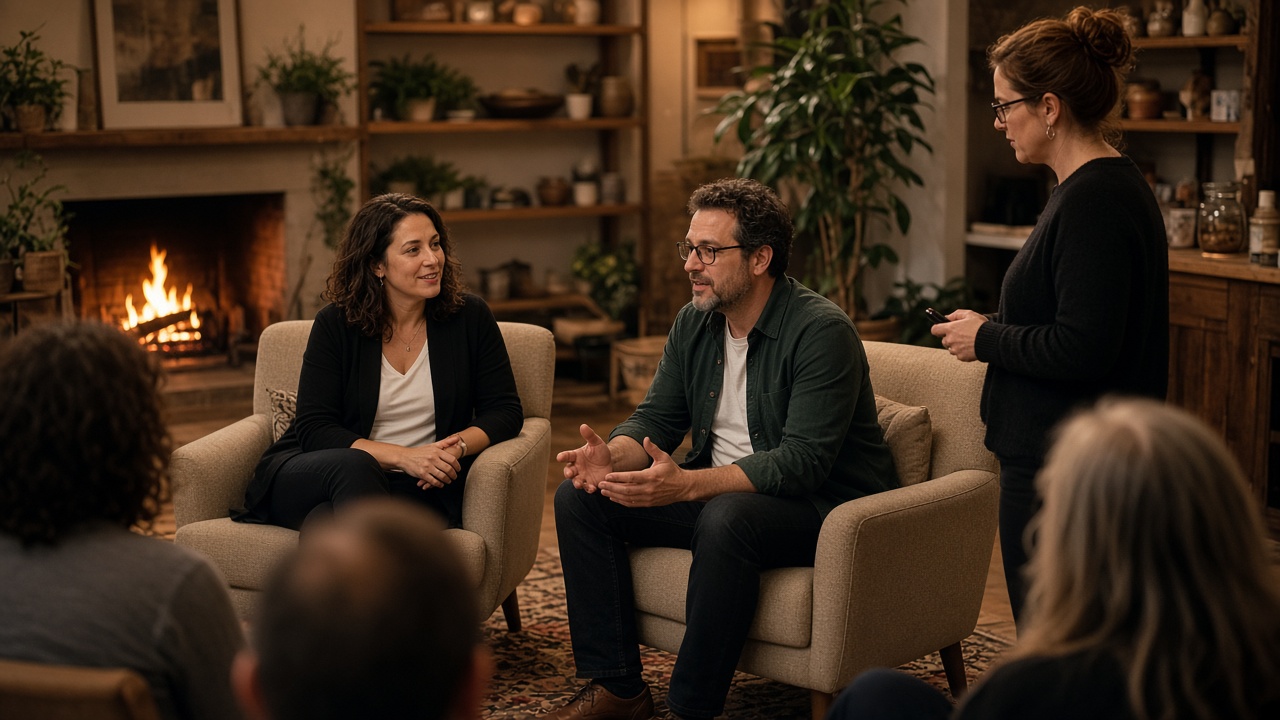
If slides calm you down, use them. If you’d rather be interviewed, Gary suggests asking for a fireside chat or a panel seat. That’s a great move for first-timers. Having a host ask you questions turns a speech into a conversation, and most business owners are already good at conversations with customers.
Read the room before you start
Any DJ will tell you the first few minutes are about reading the crowd. Who’s here? What’s their energy? A retirement party and a college graduation want different songs, and they want different talks too.
Before you speak, find out who’s in the audience. Ask the organizer. When you get up there, ask a quick show-of-hands question. Then adjust. If the room is full of retirees, skip the jargon about cloud backups and talk about protecting family photos. Make it about their problems, not your résumé.
You don’t need a big personality
Gary makes a point I wish more people heard: introverts can be great speakers. Some of the best presenters I’ve seen at local business events are calm, quiet experts. Their secret is clarity. They make one or two points, give a real example, and leave time for questions. If that’s your style, own it.
He also says the real fear is usually judgment, worrying what people will think. My advice from years of holding a microphone: the audience wants you to do well. They came to learn something or have a good time, and they’re on your side from the first minute.
Your next talk is the one that counts
Gary closes by saying you’re only as good as your last talk. For a small business, I’d treat that as a reason to keep practicing. Do one talk this quarter. Then do another. Each one gets easier, and each one is a chance for a room full of potential customers to remember your name.
Try this in the next 30 days
- Write down three questions your customers ask you every week. That’s your talk.
- Contact one local group (Chamber, Rotary, library, church, school PTA) and offer a free 20-minute session.
- Ask for a fireside chat or Q&A format if a solo talk feels like too much.
- Record it on your phone and post a clip to your website and social channels.
- Put a simple next step on your last slide or in your closing line: your website, phone number, or a free checklist.
If you want help turning your talks into content, setting up a page on your website where people can book you, or getting your event clips online, that’s work I do every day. Reach out and let’s talk.
Original article by Gary Vaynerchuk: Stop Trying to Impress the Room. Start Helping It. (Underpriced Actions, Nov 4, 2026). All credit for the original ideas goes to Gary Vee.